

Scope 3 emissions are the indirect greenhouse gases produced across a company's value chain, from purchased materials to how customers use and discard its products. For most companies, this category represents the largest share of their total footprint, which means investors and regulators increasingly judge climate credibility on how well it is measured, prioritized, and disclosed.
TL;DR:
- Focusing on high-spend or high-impact categories first, especially the use of sold products and supply chain emissions, can significantly improve Scope 3 measurement efficiency.
- It is recommended to prioritize gathering spend-based estimates initially and upgrade only the most material categories to supplier-specific data to reduce costs.
- Contractors should consistently document boundaries, assumptions, and data sources to ensure transparency and satisfy auditor requirements.
- Tools like automated bill validation and half-hourly usage analytics help improve data accuracy and reduce manual effort in Scope 3 inventories.
- Engaging suppliers through contract clauses, data sharing, and mutual targets is essential for aligning Scope 3 reduction efforts within organizations.
Table of Contents
- What Scope 3 covers and how it differs from Scope 1 and Scope 2
- The 15 Scope 3 categories explained with examples
- Why Scope 3 is hard: data boundaries, tiers, and common pitfalls
- Setting targets and supplier engagement for Scope 3
- Reporting and materiality under IFRS S2 and UK guidance
- Practical tools and next steps to start a Scope 3 program
- Author perspective: pragmatic ambition over perfection
- EnerlyticsAI: supporting Scope 1 to 3 measurement and reporting
- Key standards and guidance to read next
- Sources
- FAQ
What Scope 3 covers and how it differs from Scope 1 and Scope 2
Scope 1 covers emissions a company burns directly, such as fuel in owned vehicles or boilers. Scope 2 covers the electricity, heat, or steam it purchases. Scope 3 covers everything else in the value chain, split by the GHG Protocol into upstream activities (before a product reaches the company) and downstream activities (after it leaves).
A few examples make the split concrete:
- A clothing retailer's Scope 3 includes the cotton farming and dyeing done by suppliers, upstream, plus the emissions customers generate washing the garments, downstream.
- A software company's Scope 3 includes the manufacturing of employee laptops and the electricity used by data centers it does not own.
- A carmaker's Scope 3 includes steel production upstream and the fuel burned by every vehicle it sells downstream, often its single largest category.
The 15 Scope 3 categories explained with examples
The GHG Protocol organizes Scope 3 into 15 categories, eight upstream and seven downstream:
- Purchased goods and services: raw materials and components bought from suppliers.
- Capital goods: machinery, buildings, and equipment purchased.
- Fuel and energy-related activities: emissions from producing fuels and electricity not already in Scope 1 or 2.
- Upstream transportation and distribution: freight carried by third parties.
- Waste generated in operations: disposal and treatment of operational waste.
- Business travel: flights, hotels, and rail for employees.
- Employee commuting: staff travel to and from work.
- Upstream leased assets: assets a company leases but does not operate.
- Downstream transportation and distribution: shipping of sold products to customers.
- Processing of sold products: further manufacturing by downstream buyers.
- Use of sold products: emissions from customers operating a product.
- End-of-life treatment of sold products: disposal or recycling after use.
- Downstream leased assets: assets a company leases out to others.
- Franchises: emissions from franchise operations.
- Investments: emissions tied to equity, debt, or project finance.
Purchased goods, use of sold products, and investments tend to dominate for manufacturers, consumer goods firms, and financial institutions, respectively. Boundary choices, such as whether to include a leased warehouse, should be documented once and applied consistently.
Why Scope 3 is hard: data boundaries, tiers, and common pitfalls
Scope 3 is difficult mainly because a company has influence over these emissions but rarely direct control. Data sits with suppliers, several tiers removed, and quality varies wildly from one vendor to the next.
Common pitfalls include:
- Chasing perfect supplier-specific data for every category instead of focusing effort where it matters most.
- Switching calculation boundaries between reporting years, which breaks comparability.
- Double counting emissions that appear in both a supplier's Scope 1 and the buyer's Scope 3.
Staff time, new software, and third-party verification all add real cost, a point raised repeatedly in the UK DESNZ call for evidence on Scope 3 reporting, where respondents cited data collection and audit costs as the main barriers to better disclosure.
Pro Tip: Start with spend-based estimates for every category, then upgrade only the two or three categories that drive most of your footprint to supplier-specific data.
Setting targets and supplier engagement for Scope 3
The Science Based Targets initiative requires Scope 3 to be included in a near-term science-based target once it reaches 40% or more of a company's total emissions, and it expects supplier engagement targets to cover at least 67% of Scope 3 emissions where that approach applies.
Three target types serve different purposes:
- Absolute targets cut total emissions regardless of growth, best for categories you influence directly.
- Intensity targets tie emissions to output or revenue, useful where business volume shifts year to year.
- Supplier engagement targets commit a set share of suppliers to set their own science-based targets, the main lever when a company lacks direct control.
Practical engagement starts with ranking suppliers by spend or emissions, then building climate clauses into contracts, a practice also discussed in procurement-focused guidance on supplier climate requirements. Support suppliers with data templates and track progress annually rather than demanding perfect figures upfront.
Reporting and materiality under IFRS S2 and UK guidance
The IFRS S2 educational material requires entities to consider all 15 GHG Protocol categories and apply a prioritized measurement framework rather than limiting disclosure to whichever categories are easiest to calculate. Material information cannot be omitted simply because full data is unavailable.
In the UK's DESNZ call for evidence, most respondents supported aligning any future Scope 3 reporting requirement with the GHG Protocol rather than creating a separate standard.
A credible disclosure typically includes:
- Which of the 15 categories are included and which are excluded, with reasons.
- The calculation method used for each material category.
- Key assumptions, emission factors, and data sources.
- Intensity ratios alongside absolute figures where relevant.
Practical tools and next steps to start a Scope 3 program
A workable Scope 3 program follows a repeatable cycle: screen the value chain, prioritize by materiality, collect data starting with the biggest categories, calculate using the most precise method each category allows, set targets aligned with SBTi criteria, engage suppliers, report transparently, then iterate as data quality improves.
Technology removes much of the manual effort in this cycle:
- Automated bill validation catches billing errors that would otherwise distort Scope 1 and 2 baselines feeding into Scope 3 benchmarks.
- Half-hourly consumption analytics expose usage patterns across sites that spend-based estimates miss entirely.
- Consolidated multi-site reporting keeps category boundaries consistent year over year, which auditors look for specifically.
Pro Tip: Treat your first Scope 3 inventory as a baseline to improve, not a final answer. Publish your assumptions alongside the numbers so reviewers can see exactly how you got there.
Author perspective: pragmatic ambition over perfection
Materiality-based prioritization beats chasing exhaustive precision everywhere at once. Give procurement, finance, and sustainability teams shared ownership of Scope 3 data, since none of them can produce a credible inventory alone. Publish your assumptions early and refine them in public rather than waiting for data that will never be perfect.
— Chris
EnerlyticsAI: supporting Scope 1 to 3 measurement and reporting
Accurate Scope 3 reporting depends on clean Scope 1 and 2 data underneath it, and that is where most inventories break down first. EnerlyticsAI handles automated bill validation and anomaly detection, half-hourly consumption analytics, and carbon reporting across Scope 1, 2, and 3, all accessible across multiple sites without upfront charges on the Starter plan.
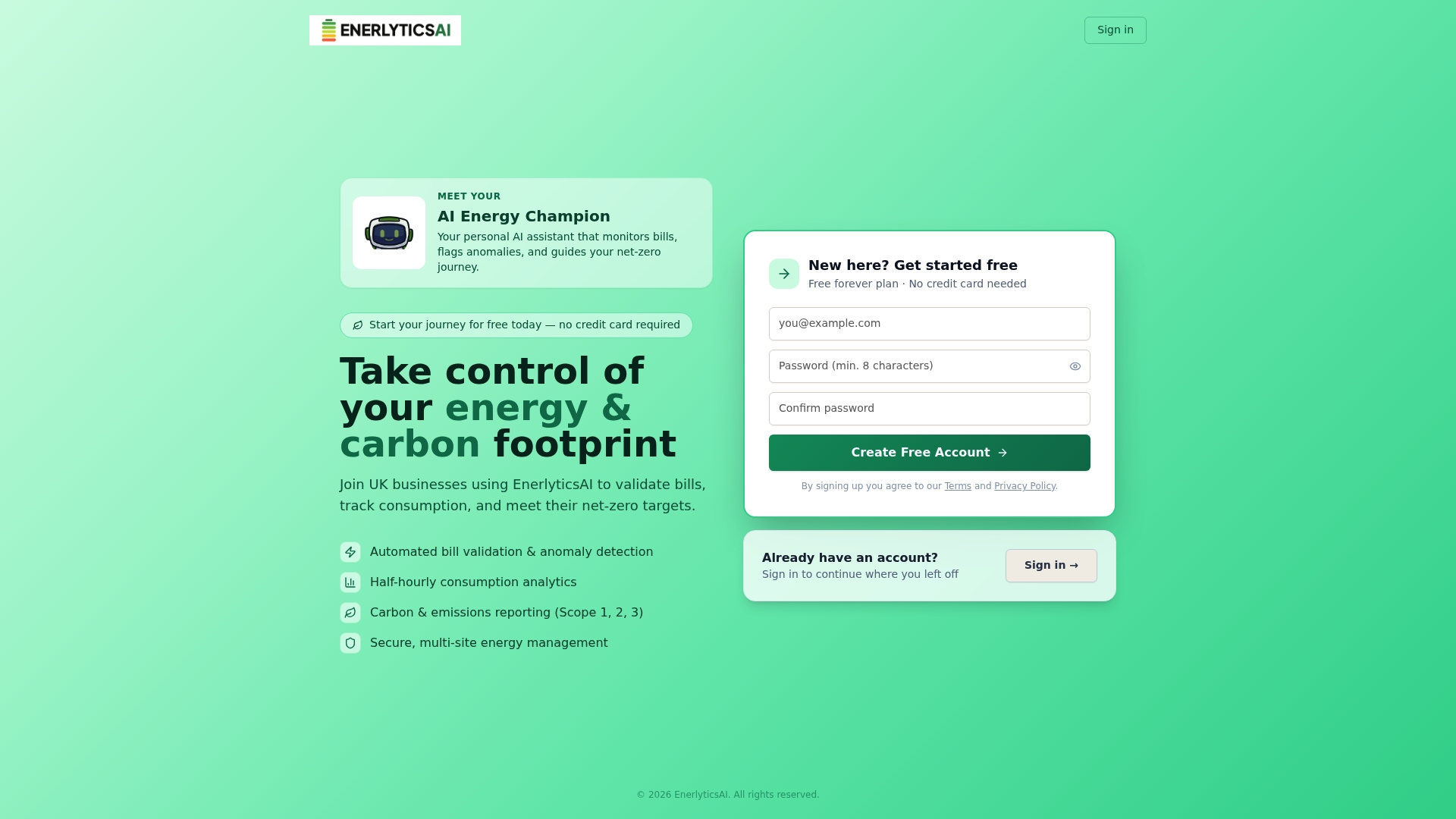
For a sustainability or facilities team managing several sites, that means one consistent dataset to build a Scope 3 inventory on, rather than reconciling spreadsheets from different energy suppliers:
- Multi-site energy and emissions data in a dashboard, useful for consistent category boundaries across locations.
- Bill validation features that flag billing errors before they distort baseline figures.
- Entry-level plans with no upfront cost for core usage.
Start with the free Starter plan to see your own consumption and billing data before deciding whether a paid tier fits your reporting needs.
Key standards and guidance to read next
For deeper methodology, consult the GHG Protocol's Scope 3 Standard, SBTi's supplier engagement guidance, IFRS S2 educational material, and the UK DESNZ call-for-evidence summary.

Sources
Start by screening the full value chain using procurement spend converted through environmentally extended input-output (EEIO) factors. This quickly flags which categories and suppliers likely account for most emissions, before any detailed data collection begins.
From there, the GHG Protocol's Scope 3 Calculation Guidance sets out four methods in order of preference:
- Corporate Value Chain (Scope 3) Standard | GHG Protocol
- Engaging supply chains on the decarbonization journey | SBTi
- IFRS S2 educational material — GHG emissions and disclosures
- Summary of responses: call for evidence — Scope 3 emissions reporting (DESNZ)
Apply the more precise methods to material, high-spend categories and reserve spend-based estimates for minor ones. Document every assumption and data source as you go, since auditors and disclosure frameworks will ask for traceability later.
Supply chain emissions are commonly reported as many times larger than a company's direct footprint, with some analyses putting the ratio at around 11 times direct emissions. That scale is why screening before calculating matters: without it, teams waste months measuring categories that barely move the total.
FAQ
What is Scope 1, Scope 2, and Scope 3 emissions?
Scope 1 covers emissions a company produces directly, such as fuel burned on-site. Scope 2 covers purchased electricity, heat, or steam, and Scope 3 covers every other indirect emission across the value chain, from suppliers to customers, organized into 15 categories by the GHG Protocol.
Why is Scope 3 so hard to measure?
Scope 3 emissions happen outside a company's direct control, so data depends on suppliers several tiers removed who may not track or share emissions figures. Costs for data collection, staff time, and verification are commonly cited as the main barriers in the UK DESNZ call for evidence.
What are the 15 categories of Scope 3 emissions?
The GHG Protocol defines eight upstream categories, including purchased goods, capital goods, and business travel, and seven downstream categories, including use of sold products and investments. The full list and definitions are set out in the GHG Protocol's Scope 3 Standard.
What is the difference between Scope 2 and Scope 3 emissions?
Scope 2 covers only the electricity, heat, or steam a company purchases for its own operations. Scope 3 covers everything else indirect, including supplier manufacturing, employee commuting, and how customers use a company's products after sale.
How do companies set Scope 3 reduction targets?
Companies typically choose between absolute targets, intensity targets, or supplier engagement targets, with the Science Based Targets initiative requiring Scope 3 inclusion in near-term targets once it reaches 40% or more of total emissions.