
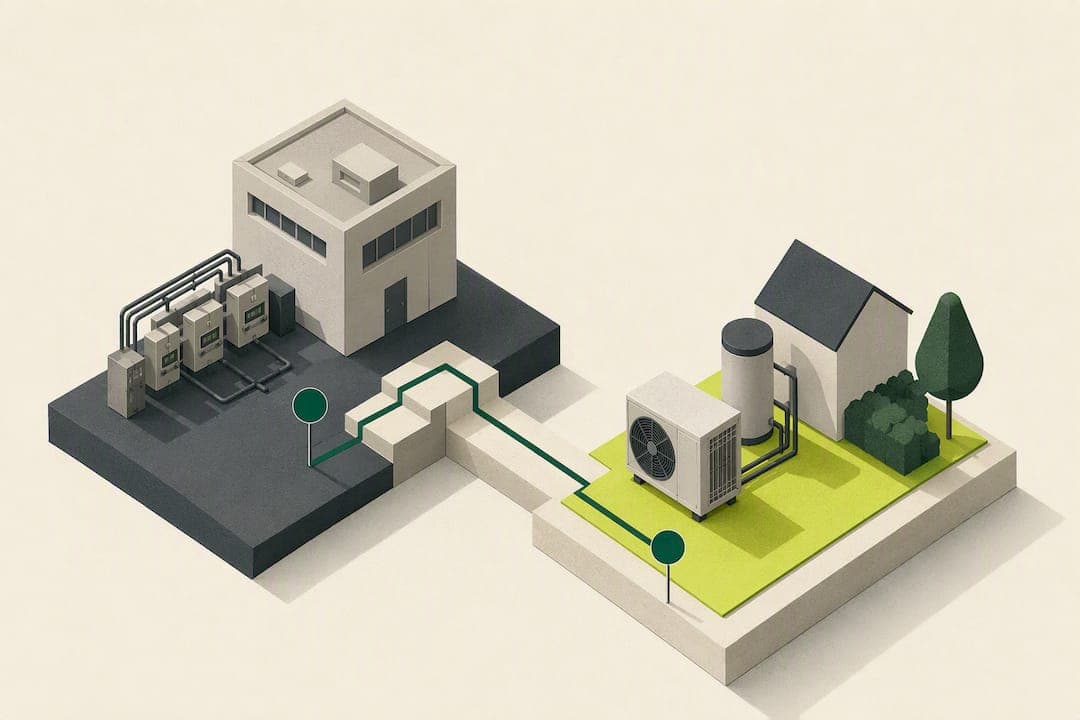
A heat decarbonisation plan (HDP) is a living, whole-estate roadmap that sequences fabric upgrades, demand reduction and low-carbon heat installations across a building portfolio. It is not a one-off report. An important early step is setting scope and governance, then gathering a consumption baseline before evaluating technology options.
TL;DR:
- A heat decarbonisation plan must include a verified consumption baseline and staged technology appraisal to reduce heat demand before installation.
- Early funding and planning stages should produce clear deliverables, including detailed designs and business cases, aligned with UK funding triggers and policy phases.
- Performance of heat pumps depends heavily on proper fabric upgrades, emitter sizing, and accurate electrical capacity assessments to avoid project delays and inefficiencies.
- Continuous KPI tracking, regular meter audits, and post-occupancy evaluations are essential to maintain and improve system performance after installation.
- Half-hourly energy data analytics and automated bill validation significantly speed up feasibility work and improve accuracy, saving weeks of manual reconciliation efforts.
Table of Contents
- What a Heat Decarbonisation Plan Covers and Why It Matters
- The Staged Planning Workflow: Strategy, Feasibility, Design
- Technical Trade-Offs You Cannot Skip Over
- Building the Business Case and Sequencing the Work
- Specify for Performance, Not Just Installation
- Keeping the Plan Alive After Installation
- How Half-Hourly Data Speeds Up Feasibility and Reporting
- A 90 to 180 Day Checklist to Start Now
- Start Baselining Your Estate With Enerlytics AI
- Sources
- FAQ
What a Heat Decarbonisation Plan Covers and Why It Matters
An HDP works as an investment and risk-management document, not a technical brochure. Salix's guidance treats it as a staged, living plan that combines fossil-fuel replacement with fabric improvements, updated as data and costs change. That staging matters because UK policy is moving fast: the Heat and Buildings Strategy signals an ambition to phase out new natural gas boiler installations by 2035, alongside rapid growth in heat pump and heat network deployment. Organizations without a plan risk scrambling when grant windows close or supply chains tighten.
A credible HDP contains, at minimum:
- A verified consumption baseline built from meter data, not estimated bills
- A no-regret fabric and controls package that reduces heat demand before sizing anything
- A staged technology appraisal covering heat pumps, heat networks and hybrid options
- Named owners, decision gates and a revision trigger for each major assumption
- KPIs tied to real performance, not manufacturer nameplate figures
The Staged Planning Workflow: Strategy, Feasibility, Design
Salix's project development framework breaks HDP work into three funded stages, each with its own deliverables. Skipping a stage is the fastest way to end up with a heat pump sized for the wrong building.
- Strategy stage. Define scope (single site or full estate), assign governance and an accountable owner, set carbon and cost targets, and produce an initial priority list of buildings based on age, fuel type and condition.
- Feasibility stage. Install or extract half-hourly meter data, commission fabric and plant condition surveys, model heat demand room by room, and run a comparative options appraisal across heat pumps, heat networks and hybrid systems.
- Design stage. Produce detailed technical designs, a procurement brief with performance clauses, and a delivery pack roughly equivalent to RIBA Stage 4, ready to go to tender.
This structure lines up deliberately with UK funding routes. Programs like the Low Carbon Skills Fund fund strategy and feasibility work directly, while later capital schemes expect a feasibility-stage business case before they release money. Treating each stage as a fundable output, rather than an internal exercise, keeps the plan bankable at every gate.
Technical Trade-Offs You Cannot Skip Over
Heat pump performance in the real world rarely matches the nameplate figure. Seasonal performance factor, the actual average efficiency across a heating season, depends heavily on flow temperature. Older radiator systems designed for 70°C to 80°C flow will punish a heat pump's efficiency unless emitters are upsized or flow temperatures are lowered first. The IEA notes that heat pumps are typically far more efficient than boilers, but that gain evaporates fast if the building fabric and emitters aren't checked before installation.
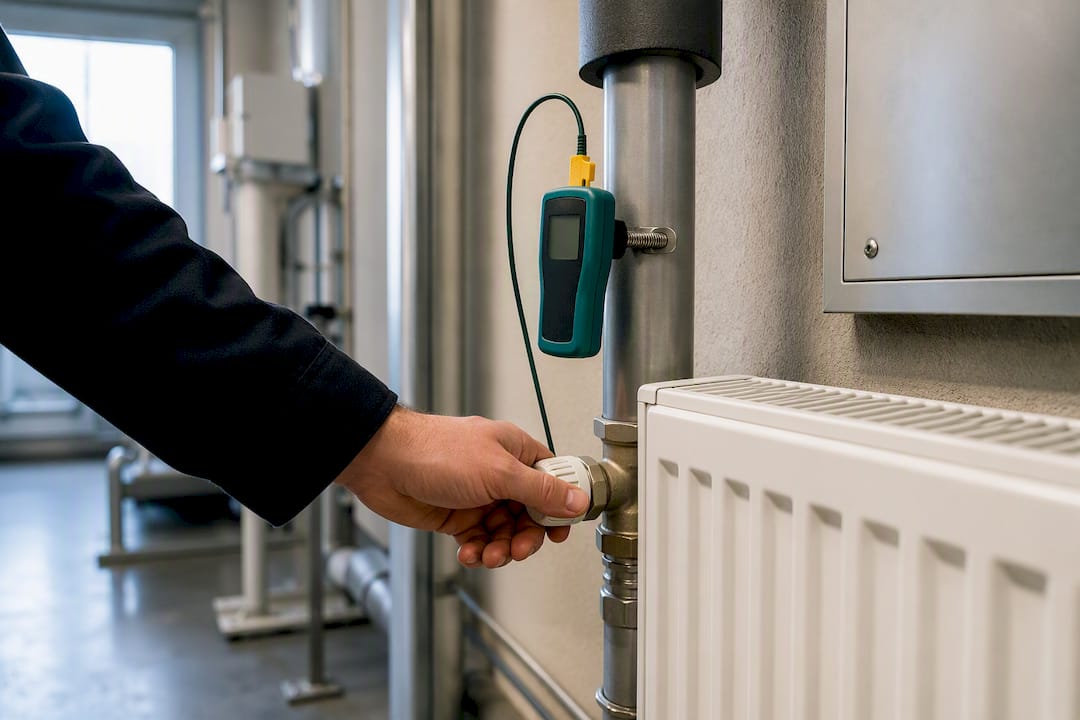
Heat networks make sense where demand density is high, such as hospital campuses or mixed-use estates with a central plant already in place. For existing networks, optimisation guidance recommends a site audit and KPI-driven baseline analysis using heat meter data before any redesign, along with alignment to HNTAS technical standards and CP1 code of practice requirements.
Hybrid systems, pairing a heat pump with a retained gas boiler for peak loads, are a pragmatic bridge for buildings where full electrification isn't feasible yet.
- Fabric upgrades and better controls shrink peak heat demand, which directly reduces the size (and cost) of the heat pump you need
- Electrical capacity checks should model coincident peak demand across the whole site, not just one building in isolation
- On-site storage and time-of-use tariffs can offset some of the grid capacity pressure that electrification creates
Pro Tip: Get your electrical capacity assessment done before you finalize a heat pump specification. A undersized grid connection discovered late in design can delay a project by months and force a costly hybrid workaround.
Building the Business Case and Sequencing the Work
Financial modelling for an HDP needs to go beyond simple payback. Net present value calculations that account for rising carbon costs and the price of inaction, continued fossil fuel exposure, maintenance creep, compliance risk, tend to tell a very different story than a raw capital cost comparison. Strategic decarbonisation guidance from USGBC frames this well: align heat decarbonisation timing with planned capital works and tenant lease cycles so you're not ripping out a working boiler two years before a refit anyway.
Funding routes worth checking for UK organizations include the Low Carbon Skills Fund and Public Sector Decarbonisation Scheme for public bodies, plus sector-specific grants that shift year to year.
- Prioritize no-regret fabric measures first. Insulation and controls pay back regardless of which heating technology you choose later
- Run a pilot on one or two representative buildings before committing estate-wide
- Sequence work to preserve future options. Don't lock in a boiler replacement that blocks a heat network opportunity five years out
- Map grid connection and planning constraints early, and build contingency time into the schedule for both
Specify for Performance, Not Just Installation
Procurement documents decide whether a heat pump performs as modelled or quietly underdelivers for a decade. CIBSE AM17 sets best-practice requirements for large non-domestic heat pump systems and is explicit that procurement should demand verified seasonal commissioning, not just handover on a mild autumn day when everything runs easily.
- Require seasonal commissioning across at least one full winter cycle before final sign-off
- Build in metering, monitoring and maintenance obligations as contract terms, not assumptions
- Choose a procurement model, whether design-and-build or a performance-based contract, that puts efficiency risk on the party best placed to manage it
- Name the most common failure mode (undersized emitters, poor controls tuning) and write a contractual remedy for it upfront
Pro Tip: Ask any bidder to show you a seasonal commissioning report from a comparable project. If they can't produce one, that tells you something about how they handled the last handover.
Keeping the Plan Alive After Installation
An HDP that sits in a drawer after commissioning has failed at its actual job. The plan needs owners and revision points built in from day one.
- Track core KPIs continuously: heat delivered, electricity consumed, seasonal performance factor, peak demand and occupant comfort feedback.
- Meter at half-hourly resolution with sub-metering on major plant, and audit data quality regularly. Bad data produces confident, wrong conclusions.
- Version the plan and set clear triggers, a funding window opening, a tariff change, an occupancy shift, for when it gets revisited.
- Run post-occupancy evaluation at three, six and twelve months, then feed findings back into ongoing optimization rather than treating commissioning as the finish line.
How Half-Hourly Data Speeds Up Feasibility and Reporting
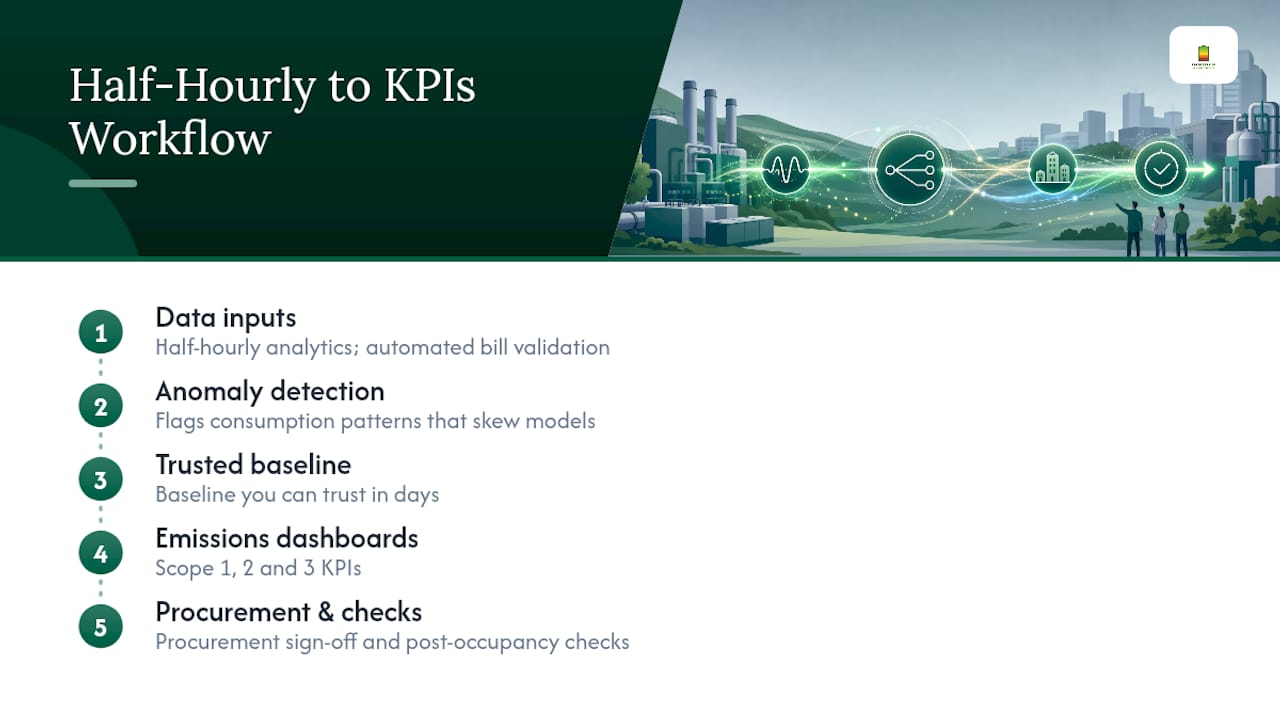
Feasibility work stalls more often on bad data than bad engineering. Half-hourly consumption analytics, the kind Enerlytics AI provides, turn weeks of manual meter reconciliation into a baseline you can trust within days, and they flag anomalous consumption patterns that would otherwise skew your heat-demand model.
Automated bill validation matters just as much. If your cost model for a business case is built on unchecked invoices, hidden billing errors can quietly distort your payback calculations. Emissions dashboards covering Scope 1, 2 and 3 also give you a natural place to embed the KPIs your HDP needs for procurement sign-off and post-occupancy checks, without building a separate reporting layer from scratch.
A 90 to 180 Day Checklist to Start Now
Set governance and name an HDP owner within the first month. Start pulling half-hourly consumption data immediately and commission surveys on your two or three highest-priority sites. Run a rapid feasibility study on those sites, write monitoring and performance clauses into any upcoming contracts, and use the results to build an early delivery roadmap with funding applications and at least one pilot project already in motion.
— Chris
Start Baselining Your Estate With Enerlytics AI
Most organizations lose weeks at the feasibility stage just reconciling meter data before any real modelling begins. The platform closes that gap by pulling half-hourly consumption analytics and automated bill validation into one dashboard, so your baseline is ready in days instead of weeks, across as many sites as your estate needs.
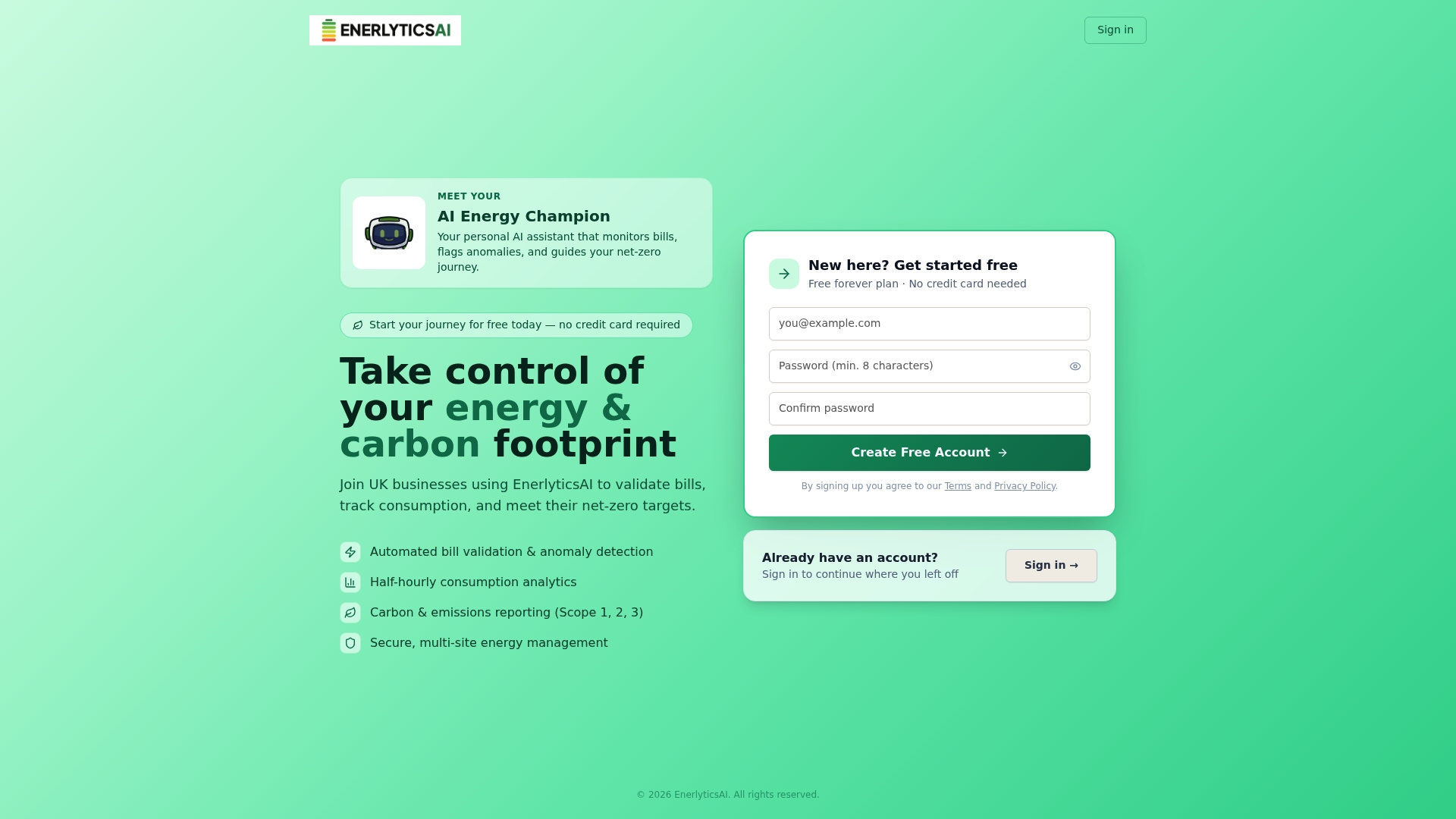
The Free forever plan gives UK organizations no-cost access to multi-site energy tracking from day one, with no upfront charge to get your first buildings connected. Once your HDP moves into feasibility and delivery, the platform's emissions reporting tools carry your Scope 1, 2 and 3 data straight into the KPI dashboards your procurement team will want at commissioning. Register a site and connect your meters to see your first baseline take shape this week.
Sources
- Phase 5 Public Sector Low Carbon Skills Fund: Heat Decarbonisation Project Development Guidance (Salix/BEIS)
- AM17 heat pump installations for large non-domestic buildings (CIBSE)
- Heat and Buildings Strategy (BEIS)
- The future of heat pumps (IEA) - executive summary
FAQ
What Is the 20 Rule for Heat Pumps?
The "20 rule" refers to keeping a heat pump's flow temperature around 20°C above the outdoor design temperature, rather than the much higher flow temperatures common with gas boilers. Lower flow temperatures are what let heat pumps hit their efficient seasonal performance factor, which is why fabric and emitter checks matter so much before installation.
What Is a Decarbonization Plan?
A decarbonization plan is a structured roadmap for reducing an organization's greenhouse gas emissions across its operations, and a heat decarbonisation plan is the version focused specifically on heating systems and building fabric. Salix's guidance frames it as a staged, living document built around a verified baseline, prioritized fabric measures and phased low-carbon heat installation.
What Does "Decarbonization of Heat" Mean?
Decarbonizing heat means replacing fossil-fuel heating, mainly natural gas boilers, with low-carbon alternatives like heat pumps or heat networks, combined with fabric improvements that cut overall demand. It is central to UK climate policy given the Heat and Buildings Strategy's ambition to end new gas boiler installations by 2035.
How Much Does Decarbonization Cost?
Costs vary enormously by building type, existing plant condition and chosen technology, so there is no single reliable figure to quote. What consistently narrows the range is accurate baseline data: validated consumption and bill data through a platform like Enerlytics AI removes a major source of cost-model error before you even reach the feasibility stage.